
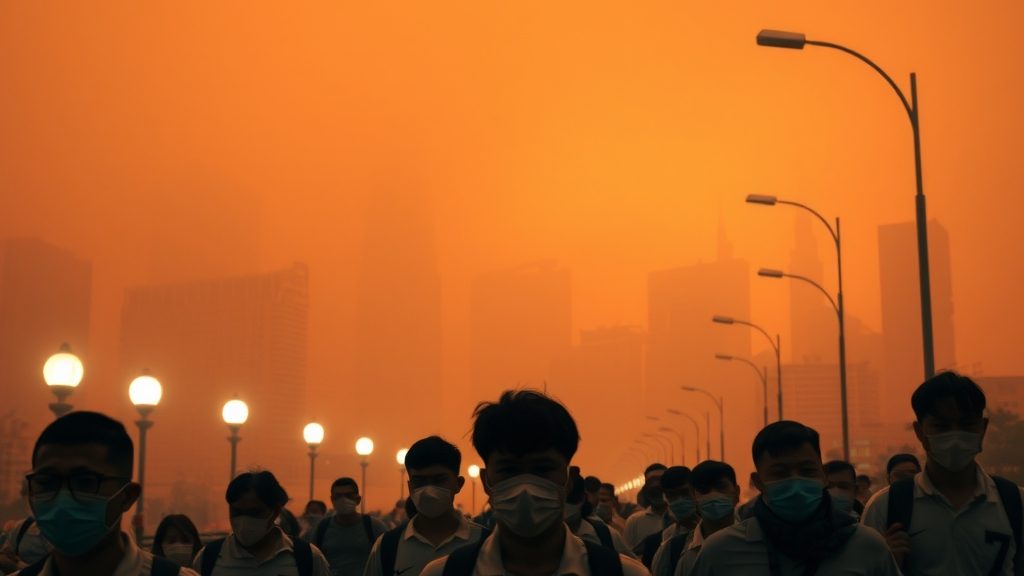
Visibility at Seletar Airport plummeted to levels requiring 16 flight diversions as smoke from massive wildfires in the Indonesian Kalimantan region descended on Singapore. The current haze, which first pushed air quality into unhealthy territory on Sept. 4, marks the most severe period of pollution in nearly three years. As the smog obscures the city-state's skyline, the impact is felt across every sector, from aviation and tourism to the daily routines of residents.
The widespread disruption carries significant economic and health implications for the population. Businesses reliant on outdoor activity are reporting sharp declines in patronage, while hotels such as Marina Bay Sands have moved to suspend specific outdoor experiences entirely. For many residents, the situation has become a matter of public health, prompting the government to begin mass mask distributions to support those most vulnerable to the persistent, acrid smoke.
Prime Minister Lawrence Wong confirmed on Thursday that his administration is actively identifying corporations potentially responsible for the forest and peatland fires. Under the Transboundary Haze Pollution Act, Singapore is preparing to take legal action against these entities. While Indonesian officials have stated they remain capable of managing the crisis, Singaporean authorities are exploring both domestic legal enforcement and joint diplomatic measures to hold those responsible for the land-clearing practices accountable.
Government officials, including Minister for Digital Development and Information Josephine Teo, continue to monitor the situation as the city-state hosts major international events. While the exact timeline for clearing the atmosphere remains uncertain, Singaporean authorities are maintaining close contact with Indonesian counterparts to coordinate potential assistance.